
About
Program Overview
In 2006, O‘ahu voters approved a Charter amendment directing one-half of one percent of the City and County of Honolulu’s annual real property tax revenues to be deposited into the Clean Water and Natural Lands (CWNL) Fund for the acquisition of real estate or any qualified interest therein for land conservation on O‘ahu. The City formally established the CWNL Fund in 2007.
In 2016, O‘ahu voters approved a Charter amendment to establish the CWNL Advisory Commission (the Commission) to review qualified proposals and make recommendations to the City Council for the expenditure of the CWNL Fund.
In 2022, a Charter amendment expanded the use of the CWNL Fund to include costs related to the operation, maintenance, and management of lands that have been acquired with the CWNL Fund.
In 2025, the Conservation Office (the CO) was created within the Department of Housing and Land Management (DHLM) to provide administrative support to the Commission and to oversee acquisitions and related conservation transactions or activities. In doing so, the City acquires real property interests in land and the CO works to ensure ongoing compliance with CWNL Fund requirements.
Conservation Purposes
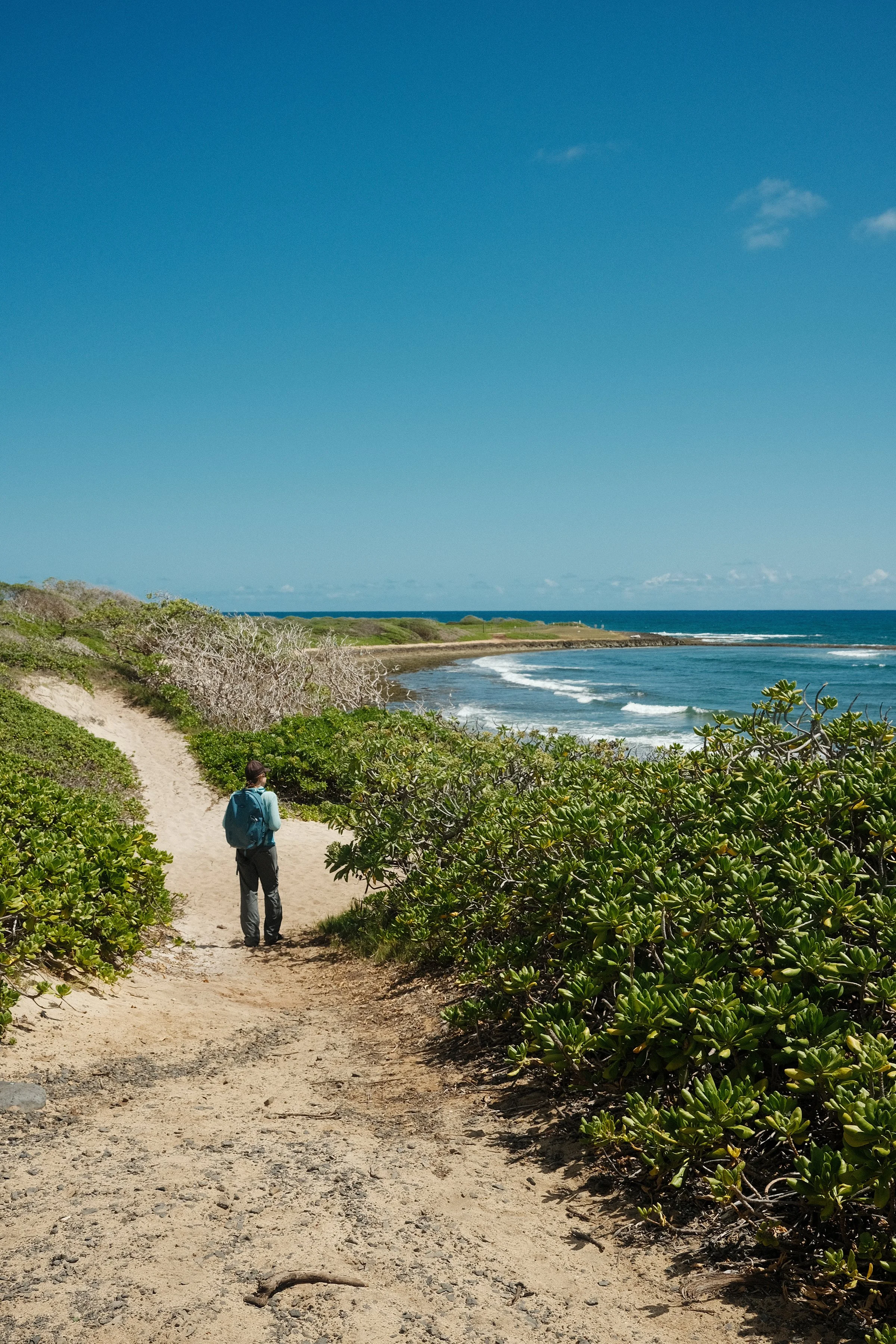
As outlined in the Charter of the City and County of Honolulu Section 9-204(a), moneys in the CWNL Fund shall be used for the purchase or acquisition of real estate, or any qualified interests therein, for land conservation within the City and County of Honolulu, for the following purposes:

WATER PROTECTION
Protection of significant watershed lands to preserve water quality and water supply.

LAND CONSERVATION
Preservation of significant forests, beaches, coastal areas, and agricultural lands.

OUTDOOR RECREATION
Public outdoor recreation and education, including access to beaches and mountains.

CULTURAL PRESERVATION
Preservation of historic or culturally important land areas and sites.

HABITAT PROTECTION
Protection of significant habitats or ecosystems, including buffer zones.

HAZARD REDUCTION
Conservation of land to significantly reduce erosion, floods, landslides, and runoff.

PUBLIC ACCESS
Acquisition of public access to public land and open space to yield a significant public benefit.
Our Team
The Clean Water and Natural Lands (CWNL) team works with landowners, community organizations, and government partners to protect Oʻahu’s natural, cultural, agricultural, and recreational resources. Our staff supports projects from proposal review and land acquisition through long-term stewardship, helping preserve these important places for generations to come.

Van Matsushige
Program Manager

Tam Nguyen
Project Manager
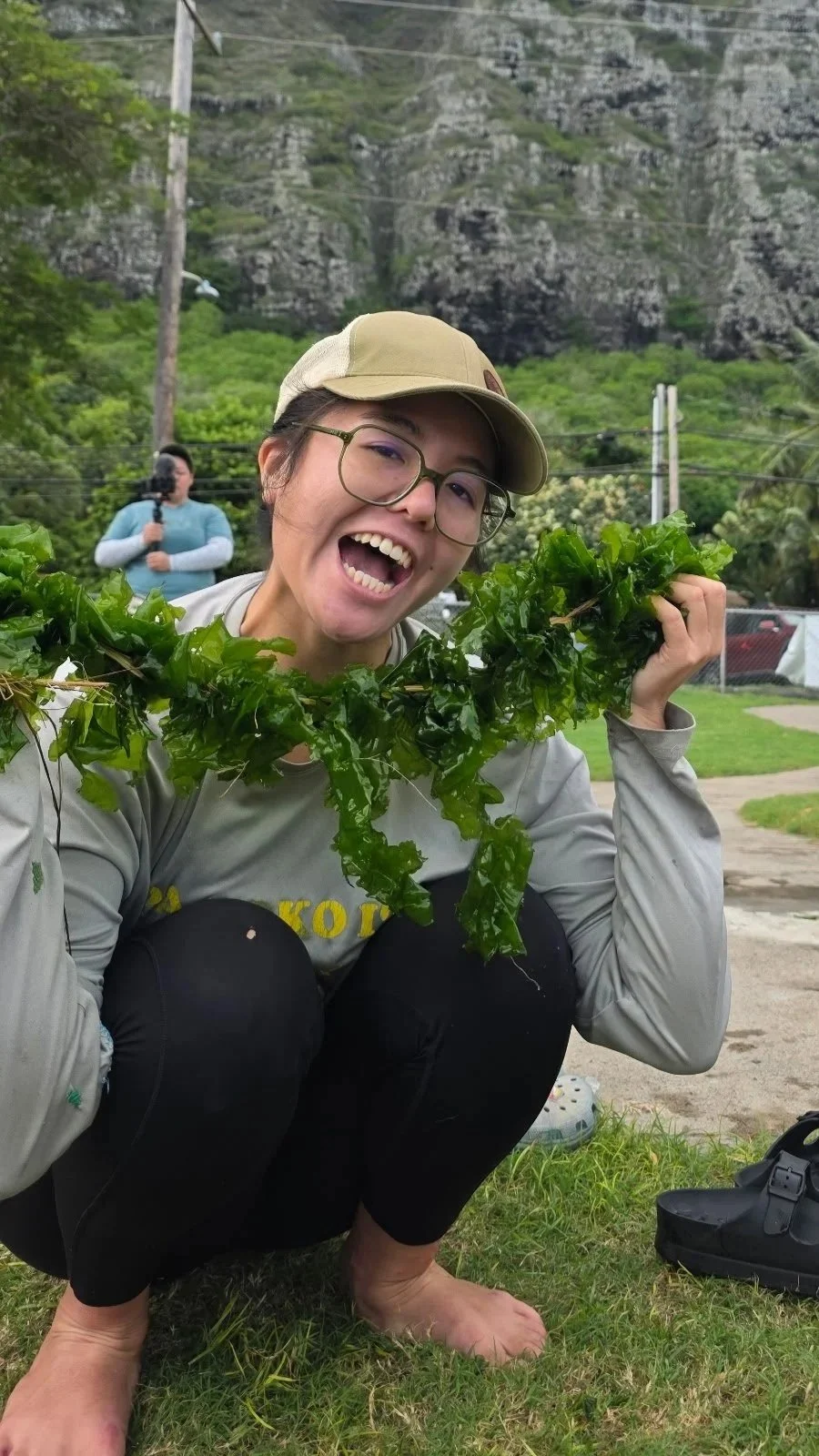
Breanne (Bree) Fong
Project Manager
City Charter
-
In 2006, Honolulu voters approved Charter Question 3, which set aside a half-percent of real property tax revenues for land conservation purposes (Revised Charter of the City and County of Honolulu 1973 (2000 Edition), Chapter 2, Section 9-204(a)). Pursuant to the charter amendment, in 2007, the Honolulu City Council established the Clean Water and Natural Lands Fund (Ordinance 07-18) and the Clean Water and Natural Lands Advisory Commission (Resolution 07-355 CD1).
In 2016, Honolulu voters approved Charter Amendment 11 to establish in the Charter an approval process and an advisory commission for Clean Water and Natural Lands Fund proposals. The Clean Water and Natural Lands Advisory Commission consist of seven volunteer members, with three appointed by the mayor, three appointed by City Council, and one appointed by a majority vote of the six appointed members. Commission members come from a variety of conservation, science, education, policy, and cultural backgrounds.
In 2022, voters approved Charter Amendment No. 3, expanding the permitted use of funds in the Clean Water and Natural Lands Fund to include funding for costs related to the operation, maintenance, and management of lands acquired by way of this fund. The allocation of funds are necessary to protect, maintain, or restore resources at risk on these lands, such as infrastructure, environmental remediation, or improvements to provide for public access and use.
In 2023, the department responsible for administering the fund transferred from the Department of Budget and Fiscal Services to the Department of Land Mangement (Resolution 23-021).
In 2025, the Department of Land Management went through a reorganization and became the Department of Housing and Land Management. Within the Department of Housing and Land Management, the Conservation Office would be responsible for the Clean Water and Natural Lands Fund and program.
The role of the Commission is to consider proposals submitted to it by the Department of Housing and Land Management and to submit recommendations to the City Council for approval of expenditures from the Clean Water and Natural Lands Fund.
After receiving applications for specific projects, the Commission reviews them carefully, invites public comment, and holds public hearings to review and assess the merits of each application. It will then forward its recommendations on the applications received to the City Council for further review and action.
Actual funding for any given recommendation by the Commission, is a part of the City’s annual budgeting process.
-
Section 9-204. Clean Water and Natural Lands Fund, Affordable Housing Fund, and Climate Resiliency Fund
There shall be established a Clean Water and Natural Lands Fund, an Affordable Housing Fund, and a Climate Resiliency Fund. In adopting each fiscal year’s budget and capital program, the council shall appropriate one and a half percent of the estimated real property tax revenues, one-third of which shall be deposited into the Clean Water and Natural Lands Fund, one-third of which shall be deposited into the Affordable Housing Fund, and the remaining one-third of which shall be deposited into the Climate Resiliency Fund.
Moneys in the Clean Water and Natural Lands Fund shall be used: (a) To purchase or otherwise acquire real estate or any qualified interest therein for land conservation in the city for the following purposes: protection of significant watershed lands to preserve water quality and water supply; preservation of significant forests, beaches, coastal areas, and agricultural lands; public outdoor recreation and education, including access to beaches and mountains; preservation of historic or culturally important land areas and sites; protection of significant habitats or ecosystems, including buffer zones; conservation of land to significantly reduce erosion, floods, landslides, and runoff; and acquisition of public access to public land and open space to yield a significant public benefit. A qualified interest means a perpetual conservation restriction by a qualified organization which has a commitment to protect the conservation purposes and the resources to enforce the restrictions; or (b) For costs related to the operation, maintenance, and management of lands acquired by way of this fund that are necessary to protect, maintain, or restore resources at risk on these lands, such as infrastructure, environmental remediation, or improvements to provide for public access and use of these lands: provided that the costs related to operation, maintenance, and management of lands acquired by way of this fund do not exceed five percent of the moneys deposited into the fund in the previous year.
Moneys in the Affordable Housing Fund shall be used to provide affordable rental housing for persons earning sixty percent or less of the median household income in the city for the following purposes: provision and expansion of affordable rental housing and suitable living environments in projects, which may include mixed-use, mixed-income projects, having residential units that are principally for persons of low and moderate income through land acquisition for, development of, construction of, and/or capital improvements or rehabilitation to such housing, provided that the funded housing remains affordable for at least sixty years.
Moneys in the Climate Resiliency Fund shall be used:
(a) To finance preventive, ameliorative, and educational measures relating to experienced and anticipated effects of climate change; (b) To enhance the resiliency of the city to climate change impacts, including investments in green infrastructure, indigenous knowledge-informed solutions, invasive species prevention and control, renewable energy, and coastal protection measures; (c) To mitigate experienced and potential flood impacts of climate change by financing the construction, repair, and maintenance of city-owned or city-controlled waterways, wetlands, streams, drainageways, channels, and water systems; (d) To educate city residents about experienced and anticipated impacts of climate change and the importance of resilience, to foster a communitywide understanding of and response to this global challenge; provided that education-related costs acquired by way of this fund do not exceed five percent of the moneys deposited into the fund in the previous year; or (e) To safeguard the city’s residents, economy, and natural environment against climate change impacts for future generations.
The moneys in each fund may also be used for the payment of principal, interest, and premium, if any, due with respect to bonds issued subsequent to enactment of this section and pursuant to Sections 3-116 or 3-117, in whole or in part, for the purposes enumerated in subsections 2 and 3 of this section and for the payment of costs associated with the purchase, redemption or refunding of such bonds.
At any given time, no more than five percent of the moneys in each fund shall be used for administrative expenses.
Any balance remaining in each fund at the end of any fiscal year shall not lapse, but shall remain in the fund, accumulating from year to year. The moneys in each fund shall not be used for any purposes except those listed in this section.
The department of housing and land management shall receive proposals for the use of funds in the Clean Water and Natural Lands Fund and shall submit qualified proposals to an advisory commission, which shall make recommendations to the council for approval. All proposals for uses of the Clean Water and Natural Lands Fund shall be processed consistent with this procedure.
There shall be established a Clean Water and Natural Lands advisory commission to consider proposals submitted to it by the department of budget and fiscal services and to submit recommendations to the council for approval of expenditures under this section. The commission shall consist of seven members, with three appointed by the mayor, three appointed by the council, and one appointed by a majority vote of the six appointed members. The members shall serve for staggered terms of five years and until their successors have been appointed and qualified. The initial appointments shall commence no later than January 15, 2017, and shall be as follows: (a) For an initial two-year term, two members, one each appointed by the mayor and the council. (c) For an initial three-year term, two members, one each appointed by the mayor and the council. (d) For an initial four-year term, two members, one each appointed by the mayor and the council. (e) For a five-year term, the member appointed by the majority vote of the other six appointed members. 9. The director of the department of budget and fiscal services shall administer the fund.
The director of the department of budget and fiscal services shall administer the funds established under this section.
The council shall by ordinance establish other procedures for the administration and expenditure of moneys in each fund consistent with this section. The appropriations to each fund shall not substitute for, but shall be in addition to, those appropriations historically made for the purposes stated in this section.
(2006 General Election Charter Amendment Question No. 3; 2016 General Election Charter Amendment Question No. 5 and 11; 2022 General Election Charter Amendment Question No. 3 (Reso. 22-079, CD2))
Note
Subsections in 9-204.8 were misnumbered in original 2016 General Election Charter Amendment Question No. 11
-
Revised City Ordinance
Article 62 . Clean Water and Natural Lands Fund
Sections:
6- 62 .1 Creation.
6- 62 .2 Purpose .
6- 62 .3 Deposit .
6- 62 .4 Report required.
6- 62 .5 Additional requirements.
6- 62 .6 Administration.
Sec. 6- 62 .1 Creation.
There is created and established a special fund to be known as the “clean water and natural lands fund.”
(1990 Code, Ch. 6, Art. 62, § 6-62.1) (Added by Ord. 07-18)
Sec. 6- 62 .2 Purpose.
The purpose of the clean water and natural lands fund is to provide for the purchase of or to otherwise acquire real estate or any interest therein for land conservation in the city for the following purposes:
(1) Protection of watershed lands to preserve water quality and water supply;
(2) Preservation of forests, beaches, coastal areas, and agricultural lands;
(3) Public outdoor recreation and education, including access to beaches and mountains;
(4) Preservation of historic or culturally important land areas and sites;
(5) Protection of significant habitats or ecosystems, including buffer zones;
(6) Conservation of land to reduce erosion, floods, landslides, and runoff; and
(7) Acquisition of public access to public land and open space.
(1990 Code, Ch. 6, Art. 62, § 6-62.2) (Added by Ord. 07-18)
Sec. 6- 62 .3 Deposit.
There shall be deposited into the clean water and natural lands fund an amount equal to one-half of the appropriation by the council of a minimum of 1 percent of the estimated real property tax revenues, plus any interest earned on deposits in the clean water and natural lands fund.
(1990 Code, Ch. 6, Art. 62, § 6-62.3) (Added by Ord. 07-18)
Sec. 6- 62 .4 Report required.
Within 15 calendar days after the mayor submits the budget documents specified in Charter § 9-102.1 to the council, the mayor shall also submit a report on the clean water and natural lands fund that shall include but not be limited to:
(1) The calculation of the minimum amount required by the charter to be appropriated from the estimated real property tax revenues and deposited into the clean water and natural lands fund and the amount to be deposited into the clean water and natural lands fund as provided in the proposed budget for the ensuing fiscal year, which shall at least equal the minimum amount;
(2) An explanation of the operating and capital program for the ensuing six fiscal years for the use of the clean water and natural lands fund. The explanation may be in the form of a functional plan spanning at least the ensuing six fiscal years for the clean water and natural lands fund, adopted by the council, and any annual updates thereto, also adopted by the council. If applicable, the explanation shall demonstrate that the operating and capital program complies with the appropriation priorities the council has established for the clean water and natural lands fund. Identification of applicable information contained in the administration’s budget submittal may satisfy this requirement;
(3) The amount included in the mayor’s proposed executive operating and capital budgets for the ensuing fiscal year from the clean water and natural lands fund, separately identifying the amount to be appropriated for administrative expenses and demonstrating that the appropriation complies with the charter’s maximum amount, and an explanation of how the budgeted amount complies with the charter requirement that the amount does not substitute for, but is in addition to the appropriations historically made for the purposes set forth in the Charter; and
(4) A list of proposed amendments to the public infrastructure maps required by the proposed appropriations from the clean water and natural lands fund.
(1990 Code, Ch. 6, Art. 62, § 6-62.4) (Added by Ord. 07-18)
Sec. 6-62 .5 Additional requirements.
(a) All expenditures from the clean water and natural lands fund shall be made consistent with the priorities established by a commission created by council resolution or, in the absence of a commission, with the priorities established by the council by resolution.
(b) Moneys in the clean water and natural lands fund may be used for the payment of principal, interest, and premium, if any, due with respect to bonds issued after enactment of this ordinance and pursuant to Charter §§ 3-116 or 3-117, in whole or in part, for the purposes enumerated above and for the payment of costs associated with the purchase, redemption, or refunding of such bonds.
(c) At any given time, no more than 5 percent of the moneys in the clean water and natural lands fund shall be used for administrative expenses.
(d) Any balance remaining in the clean water and natural lands fund at the end of any fiscal year shall not lapse, but shall remain in the clean water and natural lands fund, accumulating from year to year. The moneys in the clean water and natural lands fund shall not be used for any purposes except those listed in this article.
(e) The appropriations to the clean water and natural lands fund shall not substitute for, but shall be in addition to, those appropriations historically made for the purposes stated in this article.
(1990 Code, Ch. 6, Art. 62, § 6-62.5) (Added by Ord. 07-18)
Sec. 6- 62 .6 Administration.
The director of budget and fiscal services shall administer the clean water and natural lands fund.
(1990 Code, Ch. 6, Art. 62, § 6-62.6) (Added by Ord. 07-18)